





JPL Knowledge Management Case Studies
Read More
A Harvard Business Review Business School case study about how JPL’s Chief Knowledge Office captures, stores and shares their knowledge recourses.
A Harvard Business Review Business School case study about how JPL’s Chief Knowledge Office captures, stores and shares their knowledge recourses.
The opportunity to build a new launch vehicle that can loft humans into space does not come along often. The Ares family of launch vehicles, conceived in response to the 2004 Vision for Space Exploration, presented the first chance for NASA engineers to get hands-on experience designing and building a human-rated system since the development […]

COBE was slated to launch on the space shuttle in 1989 from Vandenberg Air Force Base. The shuttle would place the satellite at an altitude of 300 kilometers, and an on-board propulsion system would then raise it to a circular 900-kilometer sun-synchronous orbit. The team that Project Manager Roger Mattson and Deputy Project Manager McCarthy […]
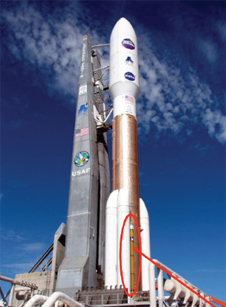
In early September 2005, the Launch Services Program at Kennedy Space Center received an unexpected call from Lockheed Martin, the manufacturer of the launch vehicle for New Horizons, NASA’s long-planned mission to Pluto. The news on the other end of the phone was not good. The launch vehicle’s fuel tank had experienced a catastrophic failure […]
In the summer of 2003, NASA Program Manager Rex Geveden was eager to ship the Gravity Probe B (GP-B) spacecraft to Vandenberg Air Force Base for integration and testing and then launch. In April the program had undergone a termination review, which in Geveden’s estimation, had been a close call. Getting the spacecraft to the […]
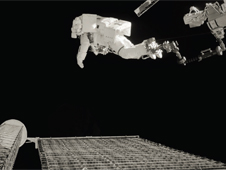
When Johnson Space Center’s Matt Lemke showed up for work as the project manager of the Space-to-Space Communications System (SSCS) at the end of 1994, he discovered that the project he had inherited was not the one he expected. In short, Matt Lemke found himself at the beginning of his first significant NASA project management […]
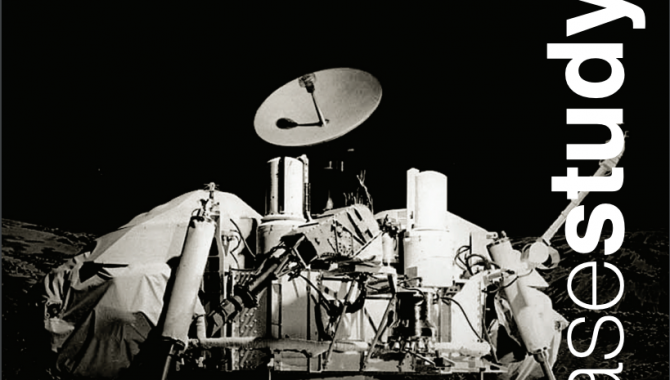
On October 26, 1971, Jim Martin of NASA’s Langley Research Center added a new entry to his “Top Ten Problems” list for the Viking project, the first mission ever to attempt a soft landing on the surface of Mars. Viking had been in development formally for nearly three years when Martin, the project manager, determined […]
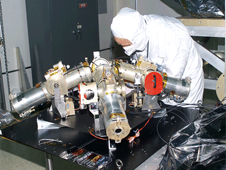
The TIMED mission was originally conceived around 1990 as a very ambitious multi-spacecraft mission. It eventually was launched on December 7, 2001 as a more modest but very capable mission using a single spacecraft. The program was caught in all the dramatic changes that NASA went through in this time period. At one point it […]

The Earth Observing System Data and Information System (EOSDIS) was started as part of the Earth Observing System (EOS). This system was meant to collect, process, distribute, and archive the large amount of data that was to be generated by the EOS program and to archive and distribute NASA Earth science data. The early concepts […]